
Breast Pathology
A Subspecialty Of Anatomic Pathology
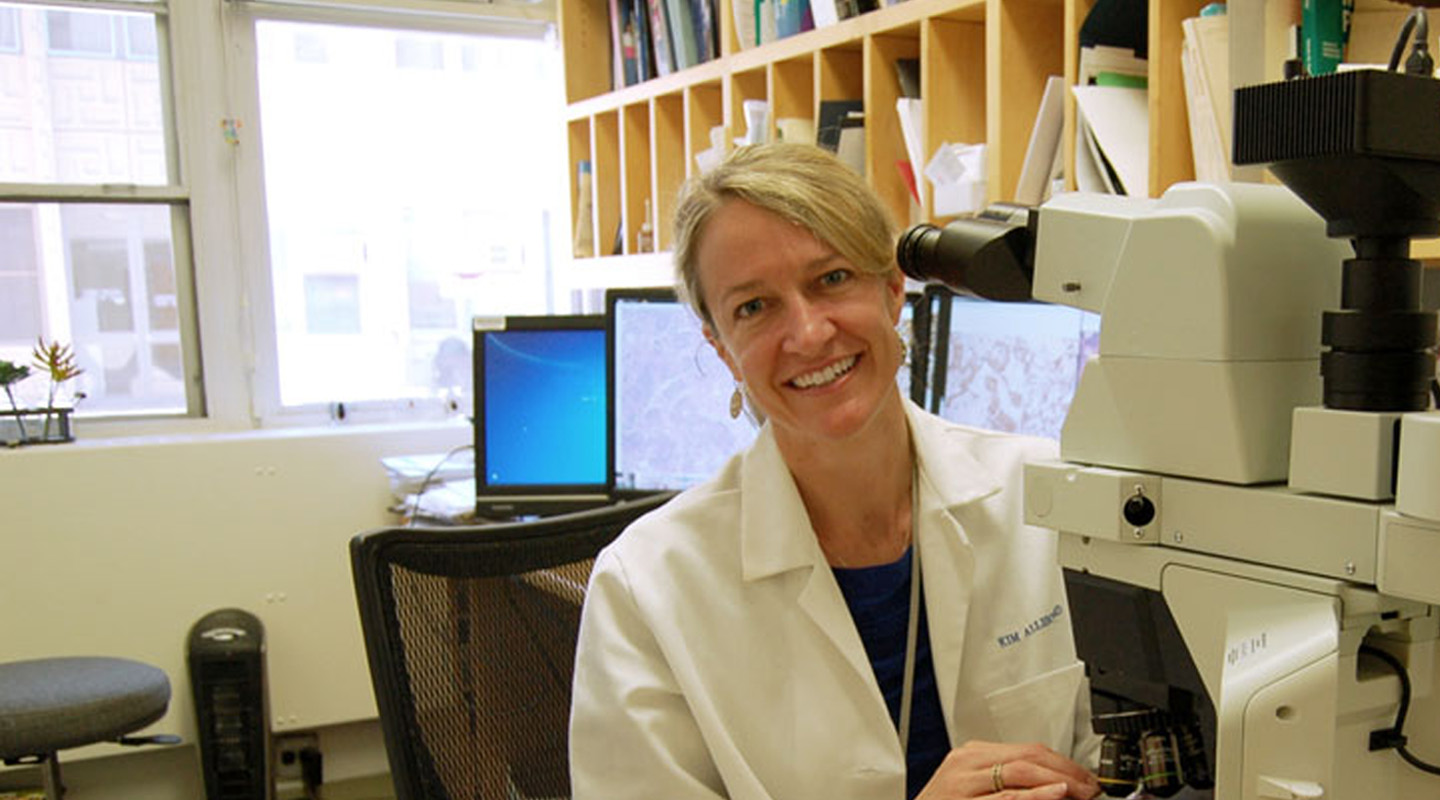
About Breast Pathology
Stanford’s Breast Pathology offers a full range of evaluation and diagnosis for breast pathology. Our team of experts provide state-of-the-art diagnostic services focused on precise diagnoses of benign, atypical and malignant breast lesions.
Our Services
Submit a Specimen
Our Faculty
Ancillary Testing
Stanford’s Breast Pathology Service specializes in interpreting and evaluating core needle breast biopsies, incisional and excisional biopsies, lumpectomy and mastectomy specimens, sentinel lymph nodes, axillary dissections, prophylactic and oncoplastic reduction mammoplasty, and neoadjuvant breast cases. Our services include:
Primary Pathology Diagnosis
All breast biopsies and surgeries taking place at Stanford Hospital undergo gross and microscopic pathology examination and reporting by the breast pathology service. We also accept wet tissue consult cases from clients outside of the Stanford system.
Consultative Opinions & Case Reviews
When a pathologist, clinician or patient not being treated at Stanford has a challenging breast pathology case, a specific question or just wants confirmation of the diagnosis, their pathology material can be sent for review to the Consult Service at Stanford Pathology and one of our breast pathologists will provide their consultative opinion on the case. This service includes assignment of a specialty pathology fellow to each case for individualized service, including call-backs with updates and final results.
The Stanford Breast Pathology Service sets high standards to ensure the most accurate diagnosis. Our faculty are involved in setting national and international standards in breast pathology including for the WHO, CAP, ASCO/CAP Testing Guidelines, International Collaboration on Cancer Reporting and AJCC Staging. In addition to having faculty with specialty expertise in breast pathology, some additional ways we ensure high quality, accurate breast pathology diagnoses including the following:
- Careful correlation of the pathology findings with the available clinical and imaging findings, including digital X-ray evaluation of most surgical cases grossed at Stanford to ensure that all lesions are appropriately sampled.
- Synoptic reporting for all primary diagnoses and breast cancer prognostic/predictive markers according to CAP/ASCO and Stanford guidelines.
- Correlation of all ancillary tests with primary histology to ensure that the results are concordant and accurate.
- A policy requiring that two breast pathologists review all breast biopsies in which a diagnosis of atypical ductal hyperplasia or low grade ductal carcinoma in situ is being considered as the primary diagnosis in order to ensure diagnostic agreement on these challenging diagnoses.
- Quality assurance policies on diagnostic agreement for breast cancers and for ancillary testing (including for unusual HER2 FISH testing results and Low Positive ER results).
- Turn-around time standards adhered to for the fastest, most accurate reporting consistent with optimal patient care.
- In addition to many cases being reviewed by multiple members of the faculty, cases get multiple reviews by pathologists-in-training including resident and fellow-level trainees, with preliminary fellow-level “hot-seat” diagnoses available before final reporting.
- Adherence to CAP guidelines for hormone receptor and HER2 testing, including proficiency testing by all faculty on the breast service.
Consult Cases
To submit slides for case review, please fill out a Stanford requisition and include all slides, relevant reports, and ancillary testing materials and reports. If possible, please include a block, as it will greatly speed the finalization of the case should additional testing be necessary. Package all materials securely and send via a padded envelope.
Wet Tissue Specimens
Please submit materials in proper transport media. All samples should be labeled with the patient information (name, DOB and one other unique identifier) and sealed in a biohazard bag. Please submit a signed Stanford requisition with each sample.
Samples and consult materials should be shipped or delivered via courier to:
Stanford Surgical Pathology
Attn: Breast Pathology
300 Pasteur Drive, Room H2110
Stanford, CA 94305
Telephone: 650-723-7211
Fax (650) 725-7409
New Client Inquiries
To arrange to be set up as a new client, please contact:
ClinOpsContracts@stanfordhealthcare.org.
Contact Us
To submit a specimen to Stanford Breast Pathology, please complete a requisition and send with sample to:
Stanford Breast Pathology
300 Pasteur Drive, Room H2110
Stanford, CA 94305
Phone: 650-723-7211
Fax: (650) 725-7409
breastpathology@
stanfordhealthcare.org
Do not send patient info to this email.
Medical Director:
Kimberly Allison, MD
To arrange to be set up as a new client, please contact:
ClinOpsContracts@
stanfordhealthcare.org
SAMPLE SUBMISSION LOGISTICS
For more information on submitting cases, see the links below:
All Requisitions
Download Stanford Requisitions for specimen submission.
Account Set-up
Information on personalized requisitions, supplies, shipping and courier pick-up.
Pricing Inquiries
Pricing inquiries and contract information.
Billing
Billing policies, information and questions.
Results Web Portal
Request access or log-in to our client results portal.
Specimen Collection and Handling
Specifications for Specimen Collection and Handling.
Consult Service FAQ's
Get answers to Frequently Asked Questions.
Kimberly Allison, MD

APPOINTMENTS
- Professor of Pathology
- Program Director for Anatomic and Clinical Residency Training Program
- Director of Breast Pathology Service and Breast Pathology Fellowship Program
PRACTICE AREAS
- Breast Pathology
- Anatomic and Clinical Pathology
CONTACT
Email: allisonk@stanford.edu
Phone: (650) 723-7211
More information about Kimberly Allison:
https://med.stanford.edu/profiles/kimberly-allison
https://profiles.stanford.edu/kimberly-allison
Gregory Bean, MD, PhD

APPOINTMENTS
- Assistant Professor of Pathology (Breast Pathology)
PRACTICE AREAS
- Anatomic Pathology
- Breast Pathology
- Molecular Pathology
CONTACT
Email: beang@stanford.edu
Phone: (650) 723-7211
More information about Gregory Bean:
https://med.stanford.edu/profiles/gregory-bean
https://profiles.stanford.edu/gregory-bean
Richard K. Sibley, MD

APPOINTMENTS
- Professor of Pathology
PRACTICE AREAS
- Anatomic Pathology
- Pathology
CONTACT
Email: Richard.Sibley@stanford.edu
Phone: (650) 723-8002
More information about Richard Sibley:
https://med.stanford.edu/profiles/richard-sibley
https://profiles.stanford.edu/richard-sibley
Megan Troxell, MD, PhD

APPOINTMENTS
- Professor of Pathology
- Co-Director, Post-Sophomore Fellowship in Pathology
- Program Director, Surgical Pathology Fellowship Program
PRACTICE AREAS
- Anatomic Pathology
- Breast Pathology
- Renal Pathology
- Genitourinary Pathology
- Transplant Pathology
CONTACT
Phone: (650) 723-1410
More information about Megan Troxell:
https://med.stanford.edu/profiles/megan-troxell
https://profiles.stanford.edu/megan-troxell
Robert West, MD, PhD

APPOINTMENTS
- Professor of Pathology
- Co-Director, Immunopathology Laboratory
PRACTICE AREAS
- Breast Cancer
- Breast pathology
- Anatomic Pathology
- Pathology and Laboratory Medicine
CONTACT
Email: rbwest@stanford.edu
Phone: (650) 736-2664
More information about Robert West:
https://med.stanford.edu/profiles/robert-west
https://profiles.stanford.edu/robert-west
Ancillary Testing
Stanford Pathology relies on a suite of ancillary testing offerings to support our expert diagnosis. Learn more about these offerings:
- Selection by a breast pathologist of the most appropriate tissue block for requested send-out tests such as OncotypeDX.
- The Stanford Molecular Diagnostic Laboratory also offers additional assays for the detection of potentially actionable mutations in cancer.
Cytogenetics/FISH »
- HER2 testing: HER2 testing performed by both immunohistochemistry and fluorescence in situ hybridization (FISH) on invasive breast cancers to assess the likelihood of benefit from HER2 targeted therapies.
Immunohistochemistry stains aid in diagnosis including: myoepithelial markers (invasion vs non-invasive lesions), histologic subtype markers, metastatic carcinoma markers, etc.
- Hormone receptor testing: Estrogen and progesterone receptor testing on both ductal carcinoma in situ and invasive breast cancers to assess the phenotype, provide prognostic information and to provide advice on the likelihood of response to hormone-based drug therapies. Androgen receptor testing is also available on request.
- HER2 testing: HER2 testing performed by both immunohistochemistry and fluorescence insitu hybridization (FISH) on invasive breast cancers to assess the likelihood of benefit from HER2 targeted therapies.
- Ki67: Provides an estimate of the proliferation index of invasive cancers.
Stanford’s Breast Pathology Service specializes in interpreting and evaluating core needle breast biopsies, incisional and excisional biopsies, lumpectomy and mastectomy specimens, sentinel lymph nodes, axillary dissections, prophylactic and oncoplastic reduction mammoplasty, and neoadjuvant breast cases. Our services include:
Primary Pathology Diagnosis
All breast biopsies and surgeries taking place at Stanford Hospital undergo gross and microscopic pathology examination and reporting by the breast pathology service. We also accept wet tissue consult cases from clients outside of the Stanford system.
Consultative Opinions & Case Reviews
When a pathologist, clinician or patient not being treated at Stanford has a challenging breast pathology case, a specific question or just wants confirmation of the diagnosis, their pathology material can be sent for review to the Consult Service at Stanford Pathology and one of our breast pathologists will provide their consultative opinion on the case. This service includes assignment of a specialty pathology fellow to each case for individualized service, including call-backs with updates and final results.
The Stanford Breast Pathology Service sets high standards to ensure the most accurate diagnosis. Our faculty are involved in setting national and international standards in breast pathology including for the WHO, CAP, ASCO/CAP Testing Guidelines, International Collaboration on Cancer Reporting and AJCC Staging. In addition to having faculty with specialty expertise in breast pathology, some additional ways we ensure high quality, accurate breast pathology diagnoses including the following:
- Careful correlation of the pathology findings with the available clinical and imaging findings, including digital X-ray evaluation of most surgical cases grossed at Stanford to ensure that all lesions are appropriately sampled.
- Synoptic reporting for all primary diagnoses and breast cancer prognostic/predictive markers according to CAP/ASCO and Stanford guidelines.
- Correlation of all ancillary tests with primary histology to ensure that the results are concordant and accurate.
- A policy requiring that two breast pathologists review all breast biopsies in which a diagnosis of atypical ductal hyperplasia or low grade ductal carcinoma in situ is being considered as the primary diagnosis in order to ensure diagnostic agreement on these challenging diagnoses.
- Quality assurance policies on diagnostic agreement for breast cancers and for ancillary testing (including for unusual HER2 FISH testing results and Low Positive ER results).
- Turn-around time standards adhered to for the fastest, most accurate reporting consistent with optimal patient care.
- In addition to many cases being reviewed by multiple members of the faculty, cases get multiple reviews by pathologists-in-training including resident and fellow-level trainees, with preliminary fellow-level “hot-seat” diagnoses available before final reporting.
- Adherence to CAP guidelines for hormone receptor and HER2 testing, including proficiency testing by all faculty on the breast service.
close Our Services
Consult Cases
To submit slides for case review, please fill out a Stanford requisition and include all slides, relevant reports, and ancillary testing materials and reports. If possible, please include a block, as it will greatly speed the finalization of the case should additional testing be necessary. Package all materials securely and send via a padded envelope.
Wet Tissue Specimens
Please submit materials in proper transport media. All samples should be labeled with the patient information (name, DOB and one other unique identifier) and sealed in a biohazard bag. Please submit a signed Stanford requisition with each sample.
Samples and consult materials should be shipped or delivered via courier to:
Stanford Surgical Pathology
Attn: Breast Pathology
300 Pasteur Drive, Room H2110
Stanford, CA 94305
Telephone: 650-723-7211
Fax (650) 725-7409
New Client Inquiries
To arrange to be set up as a new client, please contact:
ClinOpsContracts@stanfordhealthcare.org.
Contact Us
To submit a specimen to Stanford Breast Pathology, please complete a requisition and send with sample to:
Stanford Breast Pathology
300 Pasteur Drive, Room H2110
Stanford, CA 94305
Phone: 650-723-7211
Fax: (650) 725-7409
breastpathology@
stanfordhealthcare.org
Do not send patient info to this email.
Medical Director:
Kimberly Allison, MD
To arrange to be set up as a new client, please contact:
ClinOpsContracts@
stanfordhealthcare.org
SAMPLE SUBMISSION LOGISTICS
For more information on submitting cases, see the links below:
All Requisitions
Download Stanford Requisitions for specimen submission.
Account Set-up
Information on personalized requisitions, supplies, shipping and courier pick-up.
Pricing Inquiries
Pricing inquiries and contract information.
Billing
Billing policies, information and questions.
Results Web Portal
Request access or log-in to our client results portal.
Specimen Collection and Handling
Specifications for Specimen Collection and Handling.
Consult Service FAQ's
Get answers to Frequently Asked Questions.
close Submit a Specimen
Kimberly Allison, MD
APPOINTMENTS
- Professor of Pathology
- Program Director for Anatomic and Clinical Residency Training Program
- Director of Breast Pathology Service and Breast Pathology Fellowship Program
PRACTICE AREAS
- Breast Pathology
- Anatomic and Clinical Pathology
CONTACT
Email: allisonk@stanford.edu
Phone: (650) 723-7211
More information about Kimberly Allison:
https://med.stanford.edu/profiles/kimberly-allison
https://profiles.stanford.edu/kimberly-allison
Gregory Bean, MD, PhD
APPOINTMENTS
- Assistant Professor of Pathology (Breast Pathology)
PRACTICE AREAS
- Anatomic Pathology
- Breast Pathology
- Molecular Pathology
CONTACT
Email: beang@stanford.edu
Phone: (650) 723-7211
More information about Gregory Bean:
https://med.stanford.edu/profiles/gregory-bean
https://profiles.stanford.edu/gregory-bean
Richard K. Sibley, MD
APPOINTMENTS
- Professor of Pathology
PRACTICE AREAS
- Anatomic Pathology
- Pathology
CONTACT
Email: Richard.Sibley@stanford.edu
Phone: (650) 723-8002
More information about Richard Sibley:
https://med.stanford.edu/profiles/richard-sibley
https://profiles.stanford.edu/richard-sibley
Megan Troxell, MD, PhD
APPOINTMENTS
- Professor of Pathology
- Co-Director, Post-Sophomore Fellowship in Pathology
- Program Director, Surgical Pathology Fellowship Program
PRACTICE AREAS
- Anatomic Pathology
- Breast Pathology
- Renal Pathology
- Genitourinary Pathology
- Transplant Pathology
CONTACT
Phone: (650) 723-1410
More information about Megan Troxell:
https://med.stanford.edu/profiles/megan-troxell
https://profiles.stanford.edu/megan-troxell
Robert West, MD, PhD
APPOINTMENTS
- Professor of Pathology
- Co-Director, Immunopathology Laboratory
PRACTICE AREAS
- Breast Cancer
- Breast pathology
- Anatomic Pathology
- Pathology and Laboratory Medicine
CONTACT
Email: rbwest@stanford.edu
Phone: (650) 736-2664
More information about Robert West:
https://med.stanford.edu/profiles/robert-west
https://profiles.stanford.edu/robert-west
close Our Faculty
Ancillary Testing
Stanford Pathology relies on a suite of ancillary testing offerings to support our expert diagnosis. Learn more about these offerings:
- Selection by a breast pathologist of the most appropriate tissue block for requested send-out tests such as OncotypeDX.
- The Stanford Molecular Diagnostic Laboratory also offers additional assays for the detection of potentially actionable mutations in cancer.
Cytogenetics/FISH »
- HER2 testing: HER2 testing performed by both immunohistochemistry and fluorescence in situ hybridization (FISH) on invasive breast cancers to assess the likelihood of benefit from HER2 targeted therapies.
Immunohistochemistry stains aid in diagnosis including: myoepithelial markers (invasion vs non-invasive lesions), histologic subtype markers, metastatic carcinoma markers, etc.
- Hormone receptor testing: Estrogen and progesterone receptor testing on both ductal carcinoma in situ and invasive breast cancers to assess the phenotype, provide prognostic information and to provide advice on the likelihood of response to hormone-based drug therapies. Androgen receptor testing is also available on request.
- HER2 testing: HER2 testing performed by both immunohistochemistry and fluorescence insitu hybridization (FISH) on invasive breast cancers to assess the likelihood of benefit from HER2 targeted therapies.
- Ki67: Provides an estimate of the proliferation index of invasive cancers.
close Ancillary Testing
Residencies and Fellowships
Anatomic Pathology Residency Programs »
Stanford Pathology offers a 3-year Anatomic Pathology residency and 4 year combination residencies in Anatomic Pathology/Clinical Pathology and Anatomic Pathology/Neuropathology.
Breast Pathology Fellowships »
Stanford offers an ACGME-accredited Fellowship in Breast Pathology.