
Ophthalmic Pathology
A Subspecialty Of Anatomic Pathology
About Ophthalmic Pathology
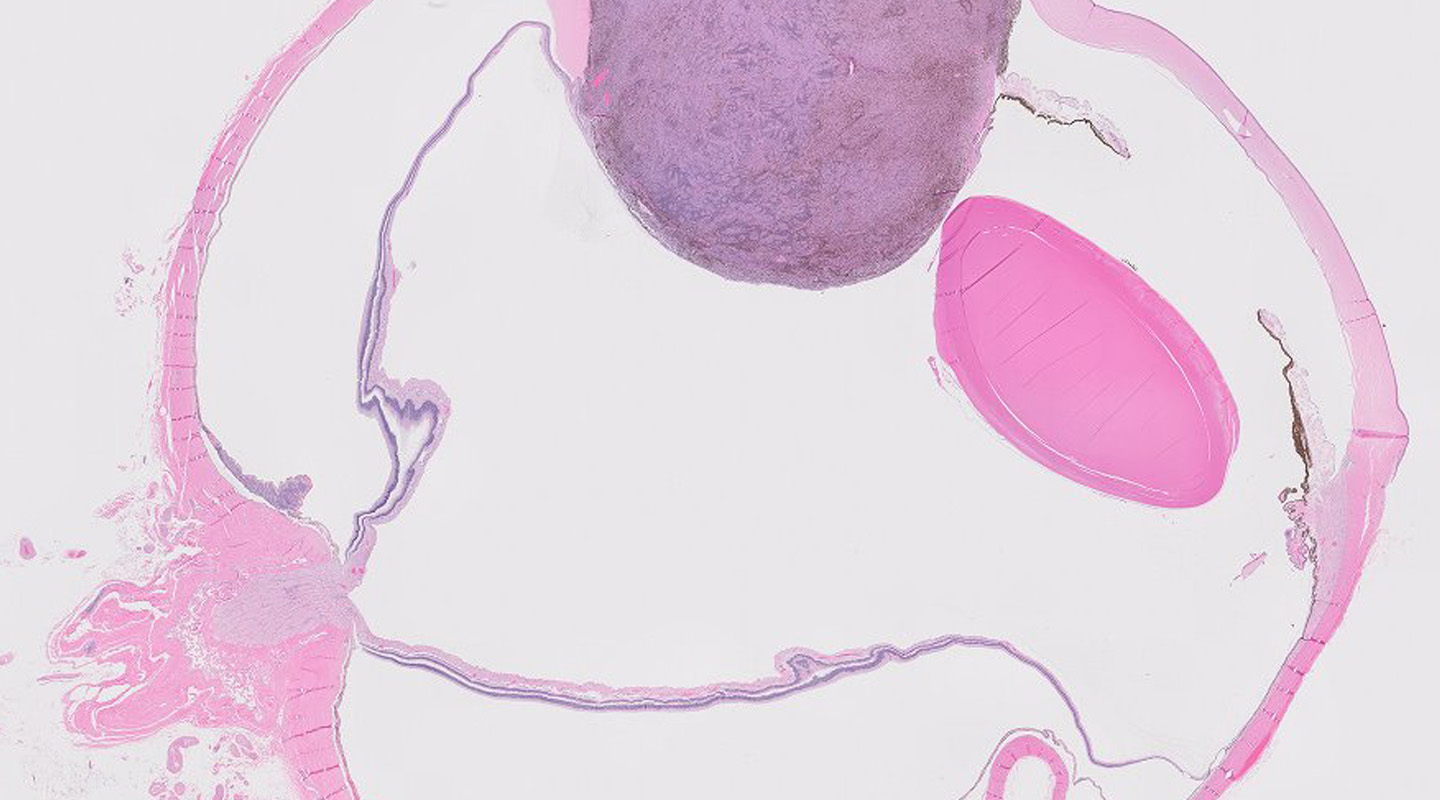
Stanford’s Ophthalmic Pathology Service evaluates specimens received from eye, orbit, and ocular adnexa in and around the eye. This includes both inflammatory and neoplastic lesions. This includes surgical and autopsy specimens.
Our Services
Submit a Specimen
Our Faculty
Ancillary Testing
The eye is an incredibly complex structure, composed of specialized “layers” of tissue, each with a specific histology and function that are essential for vision. Stanford’s Ophthalmic Pathology Service evaluates the broad range of specimens received from in and around the eye for both inflammatory and neoplastic lesions.
Primary Pathology Diagnosis
Stanford’s Ophthalmic Pathology Service performs gross and microscopic examination and reporting of wet tissue cases. Our pathologists are well versed in difficult cases including:
- Conjunctival pigmented lesions
- Intraocular tumors
- Retinoblastoma
- Sebaceous cell carcinoma of the eyelid
- Uveal melanoma
- Vitreous large cell lymphoma
Our service also offers histopathology, immunohistochemical, molecular, and genetic tools to diagnose and provide prognostic data on eye diseases.
Consultative Opinions & Case Reviews
Stanford’s Ophthalmic Pathology Service offers consultative opinions on challenging cases submitted from outside of the Stanford network. These consultations can be utilized to offer expert opinion, answer specific questions or confirm diagnosis.
Consult Cases
To submit slides for case review, please complete a Stanford requisition and include all slides, relevant reports, and ancillary testing materials and reports. If possible, please include a block, as it will greatly speed the finalization of the case should additional testing be necessary. Package all materials securely and send via a padded envelope.
Wet Tissue Specimens
Please submit materials in proper transport media. All samples should be labeled with the patient information (name, DOB and one other unique identifier) and sealed in a biohazard bag. Please submit a signed Stanford requisition with each sample.
Samples and consult materials should be shipped or delivered via courier to:
Stanford Anatomic Pathology
Attn: Ophthalmic Pathology
300 Pasteur Drive, Room H2110
Stanford, CA 94305
Telephone: 650-723-7211
Fax (650) 725-7409
New Client Inquiries
To arrange to be set up as a new client, please contact:
ClinOpsContracts@stanfordhealthcare.org.
Contact Us
To submit a specimen to Ophthalmic Pathology, please complete a requisition and send with sample to:
Stanford Ophthalmic Pathology Service
300 Pasteur Drive, Room H2110
Stanford, CA 94305
Phone: 650-723-7211
Fax: (650) 725-7409
eyepathology@
stanfordhealthcare.org
Do not send patient info to this email.
Medical Director:
Jonathan Lin, MD, PhD
To arrange to be set up as a new client, please contact:
ClinOpsContracts@
stanfordhealthcare.org
SAMPLE SUBMISSION LOGISTICS
For more information on submitting cases, see the links below:
All Requisitions
Download Stanford Requisitions for specimen submission.
Account Set-up
Information on personalized requisitions, supplies, shipping and courier pick-up.
Pricing Inquiries
Pricing inquiries and contract information.
Billing
Billing policies, information and questions.
Results Web Portal
Request access or log-in to our client results portal.
Specimen Collection and Handling
Specifications for Specimen Collection and Handling.
Consult Service FAQ's
Get answers to Frequently Asked Questions.
Jonathan Lin, MD, PhD

APPOINTMENTS
- Professor of Pathology and Ophthalmology
- Director of Eye Pathology
PRACTICE AREAS
- Pathology
- Eye Pathology
CONTACT
Phone: (650) 724-4704
More information about Jonathan Lin:
https://med.stanford.edu/profiles/216141
https://profiles.stanford.edu/216141
Donald Born, MD, PhD

APPOINTMENTS
- Clinical Professor of Pathology (Neuropathology)
- Assistant Director of Neuropathology Service
PRACTICE AREAS
- Anatomic Pathology
- Neuropathology
- Ocular Pathology
- Neurodegeneration
CONTACT
Email: donborn@stanford.edu
Phone: (650) 723-6041
More information about Donald Born:
https://med.stanford.edu/profiles/donald-born
https://profiles.stanford.edu/donald-born
Ryan Basham, MD
APPOINTMENTS
- Clinical Instructor, Ophthalmology
PRACTICE AREAS
- Ophthalmology
CONTACT
Phone: (408) 354-4740
More information about Ryan Basham:
https://med.stanford.edu/profiles/ryan-basham
https://profiles.stanford.edu/ryan-basham
Peter Egbert, MD

APPOINTMENTS
- Emeritus Faculty, Acad Council, Ophthalmology
PRACTICE AREAS
- Ophthalmology
CONTACT
Email: egbert@stanford.edu
More information about Peter Egbert:
https://med.stanford.edu/profiles/peter-egbert
https://profiles.stanford.edu/peter-egbert
Ancillary Testing
Stanford Pathology relies on a suite of ancillary testing offerings to support our expert diagnosis. Learn more about these state-of-the-art offerings.
The eye is an incredibly complex structure, composed of specialized “layers” of tissue, each with a specific histology and function that are essential for vision. Stanford’s Ophthalmic Pathology Service evaluates the broad range of specimens received from in and around the eye for both inflammatory and neoplastic lesions.
Primary Pathology Diagnosis
Stanford’s Ophthalmic Pathology Service performs gross and microscopic examination and reporting of wet tissue cases. Our pathologists are well versed in difficult cases including:
- Conjunctival pigmented lesions
- Intraocular tumors
- Retinoblastoma
- Sebaceous cell carcinoma of the eyelid
- Uveal melanoma
- Vitreous large cell lymphoma
Our service also offers histopathology, immunohistochemical, molecular, and genetic tools to diagnose and provide prognostic data on eye diseases.
Consultative Opinions & Case Reviews
Stanford’s Ophthalmic Pathology Service offers consultative opinions on challenging cases submitted from outside of the Stanford network. These consultations can be utilized to offer expert opinion, answer specific questions or confirm diagnosis.
close Our Services
Consult Cases
To submit slides for case review, please complete a Stanford requisition and include all slides, relevant reports, and ancillary testing materials and reports. If possible, please include a block, as it will greatly speed the finalization of the case should additional testing be necessary. Package all materials securely and send via a padded envelope.
Wet Tissue Specimens
Please submit materials in proper transport media. All samples should be labeled with the patient information (name, DOB and one other unique identifier) and sealed in a biohazard bag. Please submit a signed Stanford requisition with each sample.
Samples and consult materials should be shipped or delivered via courier to:
Stanford Anatomic Pathology
Attn: Ophthalmic Pathology
300 Pasteur Drive, Room H2110
Stanford, CA 94305
Telephone: 650-723-7211
Fax (650) 725-7409
New Client Inquiries
To arrange to be set up as a new client, please contact:
ClinOpsContracts@stanfordhealthcare.org.
Contact Us
To submit a specimen to Ophthalmic Pathology, please complete a requisition and send with sample to:
Stanford Ophthalmic Pathology Service
300 Pasteur Drive, Room H2110
Stanford, CA 94305
Phone: 650-723-7211
Fax: (650) 725-7409
eyepathology@
stanfordhealthcare.org
Do not send patient info to this email.
Medical Director:
Jonathan Lin, MD, PhD
To arrange to be set up as a new client, please contact:
ClinOpsContracts@
stanfordhealthcare.org
SAMPLE SUBMISSION LOGISTICS
For more information on submitting cases, see the links below:
All Requisitions
Download Stanford Requisitions for specimen submission.
Account Set-up
Information on personalized requisitions, supplies, shipping and courier pick-up.
Pricing Inquiries
Pricing inquiries and contract information.
Billing
Billing policies, information and questions.
Results Web Portal
Request access or log-in to our client results portal.
Specimen Collection and Handling
Specifications for Specimen Collection and Handling.
Consult Service FAQ's
Get answers to Frequently Asked Questions.
close Submit a Specimen
Jonathan Lin, MD, PhD
APPOINTMENTS
- Professor of Pathology and Ophthalmology
- Director of Eye Pathology
PRACTICE AREAS
- Pathology
- Eye Pathology
CONTACT
Phone: (650) 724-4704
More information about Jonathan Lin:
https://med.stanford.edu/profiles/216141
https://profiles.stanford.edu/216141
Donald Born, MD, PhD
APPOINTMENTS
- Clinical Professor of Pathology (Neuropathology)
- Assistant Director of Neuropathology Service
PRACTICE AREAS
- Anatomic Pathology
- Neuropathology
- Ocular Pathology
- Neurodegeneration
CONTACT
Email: donborn@stanford.edu
Phone: (650) 723-6041
More information about Donald Born:
https://med.stanford.edu/profiles/donald-born
https://profiles.stanford.edu/donald-born
Ryan Basham, MD
APPOINTMENTS
- Clinical Instructor, Ophthalmology
PRACTICE AREAS
- Ophthalmology
CONTACT
Phone: (408) 354-4740
More information about Ryan Basham:
https://med.stanford.edu/profiles/ryan-basham
https://profiles.stanford.edu/ryan-basham
Peter Egbert, MD
APPOINTMENTS
- Emeritus Faculty, Acad Council, Ophthalmology
PRACTICE AREAS
- Ophthalmology
CONTACT
Email: egbert@stanford.edu
More information about Peter Egbert:
https://med.stanford.edu/profiles/peter-egbert
https://profiles.stanford.edu/peter-egbert
close Our Faculty
Ancillary Testing
Stanford Pathology relies on a suite of ancillary testing offerings to support our expert diagnosis. Learn more about these state-of-the-art offerings.
close Ancillary Testing
Residencies and Fellowships
Anatomic Pathology Residency Programs »
Stanford Pathology offers a 3-year Anatomic Pathology residency and 4 year combination residencies in Anatomic Pathology/Clinical Pathology and Anatomic Pathology/Neuropathology.
Eye Pathology Fellowship »
Stanford Pathology offers a ACGME-accredited fellowship in Ophthalmic Pathology.